AI Economics

The problem isn’t usage. It’s control.
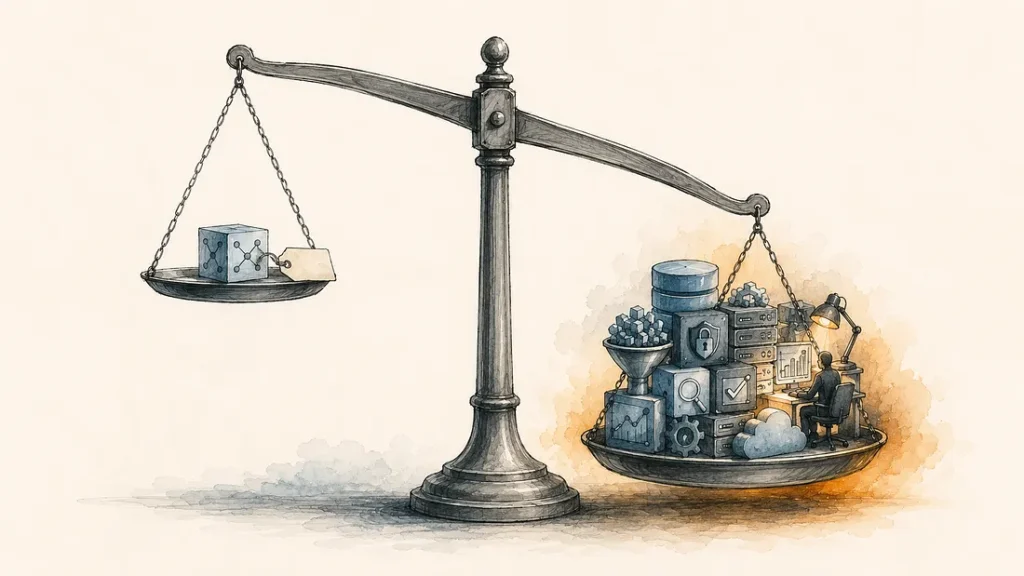
Kubernetes cost transparency was hard.
AI cost transparency is worse.
Not incrementally worse.
Fundamentally worse.
Kubernetes Was Complex — But It Had Structure
Kubernetes introduced real challenges:
- Shared infrastructure
- Indirect resource consumption
- Difficult allocation models
- Overprovisioning hidden in requests versus usage
Over time, things improved.
OpenCost helped standardize cost calculation. Tools like Kubecost made Kubernetes costs visible. Cloud platforms exposed usage data. FinOps teams built allocation models.
It wasn’t perfect.
But it became manageable.
AI Doesn’t Have That Foundation
AI workloads don’t behave like Kubernetes.
They don’t behave like traditional cloud either.
Instead:
- Pricing is token-based or API-driven
- Billing is inconsistent across providers
- Usage patterns change rapidly
- Cost rarely maps cleanly to ownership
There is no standard model.
Without a model, transparency breaks down quickly.
Visibility Exists — Context Doesn’t
The State of FinOps 2026 report shows that nearly all organizations are now managing AI spend.
But maturity hasn’t caught up.
Costs appear.
Context does not.
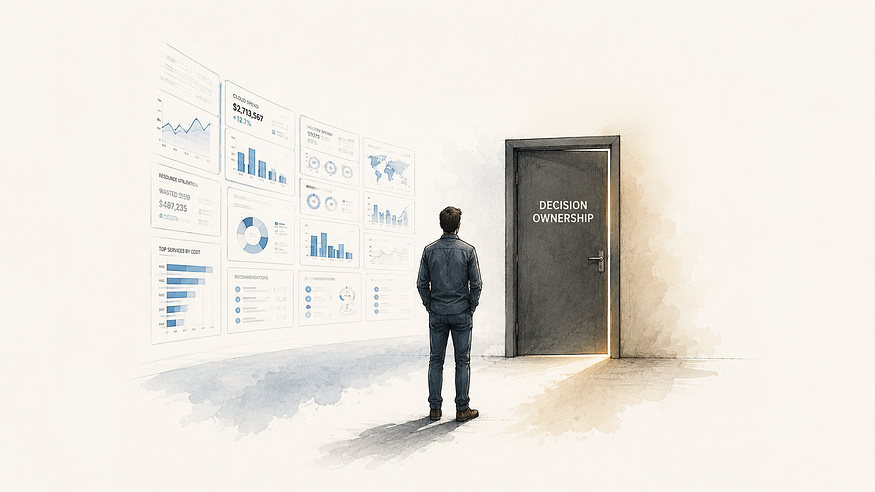
Questions like ownership, drivers, and required actions are often unanswered.
There Is No Clean Ownership Model
Kubernetes at least gave teams a starting point.
Namespaces provided a rough approximation of ownership.
AI does not.
Instead:
- API keys are shared
- Services are embedded across applications
- Consumption spans teams and environments
When cost increases, attribution becomes unclear.
Usage Doesn’t Map to Value
Cloud and Kubernetes have a rough alignment between usage and infrastructure.
AI breaks that relationship.
More tokens do not necessarily mean more value.
Cost becomes visible without becoming explainable.
The Feedback Loop Is Delayed
AI cost accumulates quietly.
Developers integrate APIs. Usage scales. Cost appears later.
By the time it is reviewed, the behavior driving that cost is already established.
Optimization Has No Standard Playbook
Cloud optimization is well understood.
Kubernetes optimization has matured.
AI optimization is inconsistent.
It involves:
- model selection
- prompt design
- caching strategies
- usage controls
There is no shared playbook that works across environments.
AI Cost Is Driven by Behavior, Not Infrastructure
Kubernetes is largely an infrastructure problem.
AI is not.
Get FinOps Universe’s stories in your inbox
AI cost is driven by:
- application design
- service interactions
- frequency of use
That makes it harder to isolate and control.
Where AI Cost Starts to Become Manageable
AI cost does not become transparent on its own.
It becomes more manageable where it intersects with systems that already have structure.
This typically happens in three areas:
- infrastructure running AI workloads
- Kubernetes environments hosting them
- application behavior driving usage
This is where existing FinOps capabilities begin to apply.
Bringing AI Back Into the Cloud Cost Model
When AI workloads run within cloud environments, they can be pulled into a broader cost model.
Platforms like Cloudability help by:
- connecting AI-related spend to overall cloud cost
- normalizing visibility across environments
- preventing AI from becoming an isolated blind spot
Cloudability does not simplify AI pricing.
It ensures AI is not disconnected from the rest of cloud cost.
Understanding How AI Runs in Kubernetes
Many AI workloads are deployed on Kubernetes.
Tools like Kubecost help expose:
- container-level resource usage
- allocation patterns
- inefficiencies in workload sizing
This helps determine whether cost is driven by actual usage or by configuration decisions.
Connecting Cost to System Behavior
Cost alone does not explain what is happening.
Understanding system behavior makes cost actionable.
Platforms like Instana provide:
- real-time visibility into application behavior
- insight into service interactions
- understanding of what is driving AI calls
AI cost is often a side effect of how systems operate.
Without this layer, cost data lacks context.
Turning Insight Into Continuous Action
Even when cost drivers are understood, acting on them consistently is difficult.
Automation becomes critical.
Platforms like Turbonomic help by:
- continuously adjusting infrastructure resources
- aligning performance and cost
- reducing overprovisioning without manual effort
AI workloads still rely on infrastructure that can be optimized.
This is where control becomes possible.
What This Actually Solves — and What It Doesn’t
This approach does not:
- standardize AI pricing
- create perfect allocation models
- fully explain AI cost
But it does:
- prevent AI from becoming completely opaque
- reconnect cost to systems that can be measured
- enable continuous optimization where possible
This is where things break
Kubernetes cost transparency was hard.
AI cost transparency is harder.
Not because there is no data.
Because cost, usage, and system behavior are not yet tightly connected.
One thing to keep in mind
If AI cost still feels unpredictable, it is not just a visibility issue.
It is a sign that cost is not yet connected to the systems and decisions that create it.
Until that connection exists, transparency will continue to fall short.
View AI Economics or contact us to discuss your FinOps priorities.