Cloud Optimization
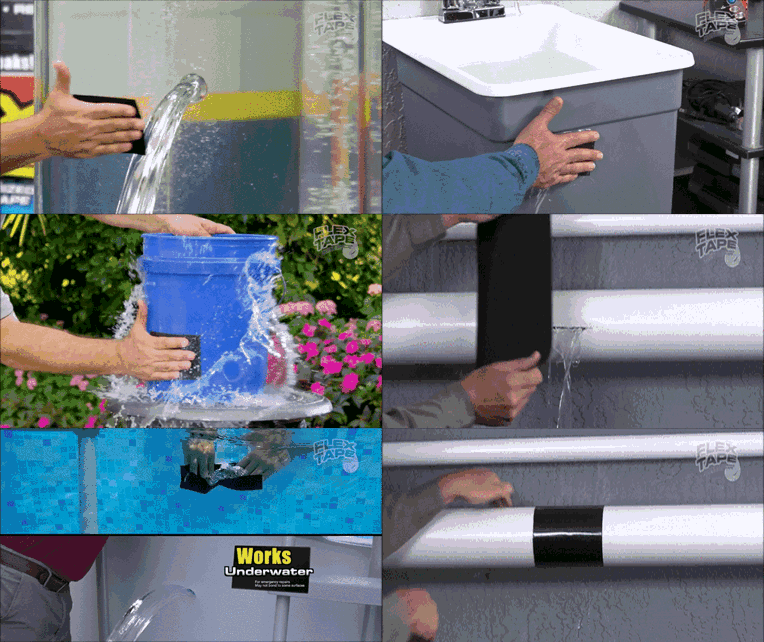
You’ve probably seen the Flex Tape demo.
There’s a leak.
Water is pouring out.
Someone slaps tape over it and calls it fixed.
It looks solved.
It isn’t.
That’s what a lot of cloud cost optimization looks like today.
Most teams don’t have a visibility problem
They can see cloud waste.
- Idle resources
- Overprovisioned environments
- Kubernetes inefficiencies
- Spend trending the wrong way
The dashboards are there.
The reports are accurate.
The problem isn’t finding the leak.
It’s what happens after you find it
Once waste is identified, the response is usually the same.
- Shut something down
- Resize a few instances
- Clean up unused resources
Costs drop.
For a moment.
Then:
- new workloads spin up
- usage patterns shift
- waste shows up again
The leak didn’t go away.
It moved.
The system keeps creating the problem
This is the part that gets missed.
Cloud environments aren’t static.
They are:
- constantly changing
- driven by application behavior
- scaled dynamically
So every “fix” is tied to a moment in time.
The system keeps running.
And it keeps producing new inefficiencies.
Why patching doesn’t work
The Flex Tape approach fails for the same reasons in cloud as it does in real life.
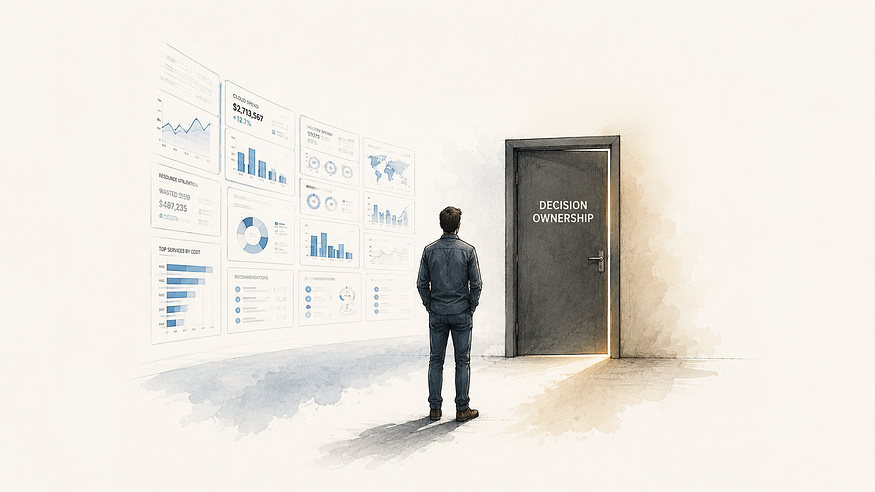
Ownership is fragmented
The data shows where cost lives.
It doesn’t guarantee someone will act on it.
Risk slows action
Reducing cost often means changing running systems.
That introduces uncertainty.
So teams hesitate.
Everything depends on people
Most optimization still relies on:
- manual reviews
- tickets
- one-time decisions
That doesn’t scale in environments that change daily.
Fixes don’t persist
Even when something is optimized:
- workloads evolve
- demand changes
- new inefficiencies appear
The system resets faster than teams can react.
This is where things stall
At this point, most organizations can explain their cloud spend.
They just can’t control it consistently.
So FinOps becomes:
- reporting
- reviewing
- explaining
Instead of actually changing outcomes.
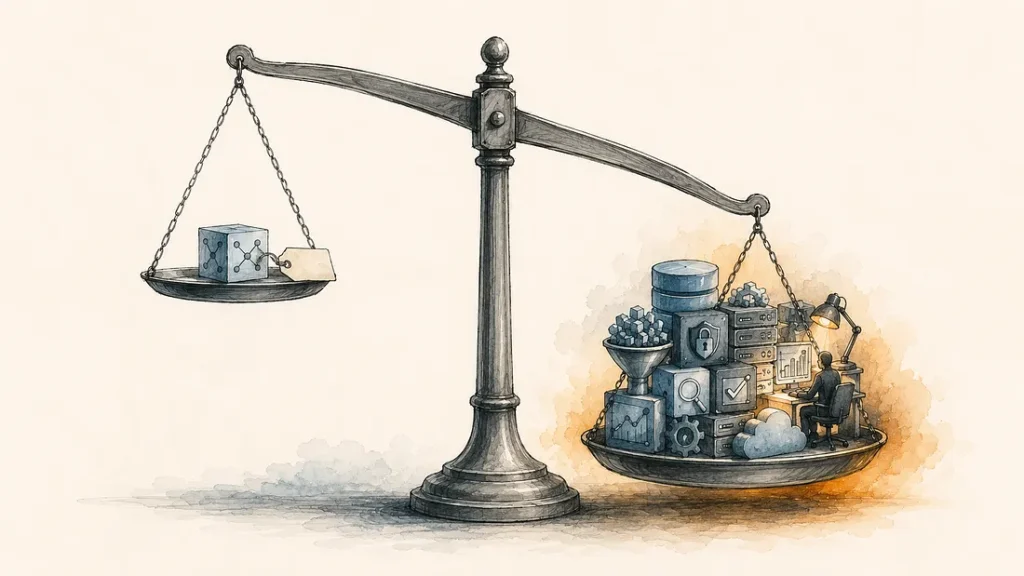
Fixing the leak vs fixing the system
The difference isn’t better visibility.
It’s whether optimization is treated as:
- a series of fixes
or
- a continuous system
That shift is where things start to change.
What actually makes a difference
The teams that move past this don’t just identify waste.
They connect three things that are usually separate.
1. A consistent view of cost
Cloud, Kubernetes, and now AI workloads all contribute to spend.
If those are disconnected, so is the response.
Platforms like Cloudability help bring that into a single model so cost isn’t fragmented across tools and teams.
Learn more:
https://finops-universe.com/guide-to-ibm-finops-tools/#cloudability
2. Understanding what the system is doing
Cost alone doesn’t explain risk.
It doesn’t explain behavior.
With observability platforms like Instana, teams can see:
- which services are driving usage
- how systems are performing
- where inefficiencies originate
That makes it possible to act without guessing.
Learn more:
https://finops-universe.com/guide-to-ibm-finops-tools/#instana
3. Acting continuously instead of occasionally
This is where most efforts fall apart.
Knowing what to fix isn’t enough.
It has to happen continuously.
Platforms like Turbonomic make that possible by:
- automatically adjusting resources
- aligning performance with cost
- removing the dependency on manual intervention
That’s what turns optimization into something that lasts.
Learn more:
https://finops-universe.com/guide-to-ibm-finops-tools/#turbonomic
What changes when this comes together
When cost, behavior, and action are connected:
- waste is reduced as the system changes
- decisions are made with confidence
- optimization doesn’t depend on constant human effort
The focus shifts from fixing individual leaks to managing the system that creates them.
This is the gap most teams are sitting in
They can see the problem clearly.
They can fix parts of it.
But they don’t have a way to keep it fixed.
The real question is
If cloud waste is already visible…
why does it keep coming back?
Where this leads
If your team is identifying waste but relying on one-time fixes, that pattern is going to repeat.
The environment will change.
The leaks will come back.
The difference is whether optimization is something you do periodically — or something your system does continuously.
That’s where most FinOps efforts either stall out or start to deliver real results.
Visit the FinOps Universe blog