FinOps Architecture
Why Your “Free” Cloud Cost Dashboard Is Quietly Fueling Overspend
Let’s start with an uncomfortable truth.
Cloud waste doesn’t fight native cost tools.
It thrives in them.
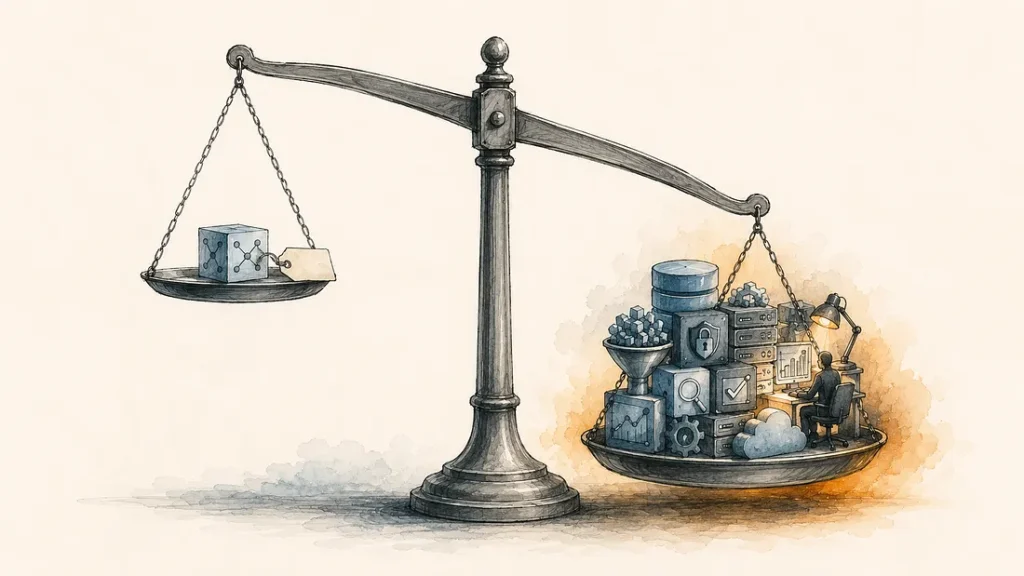
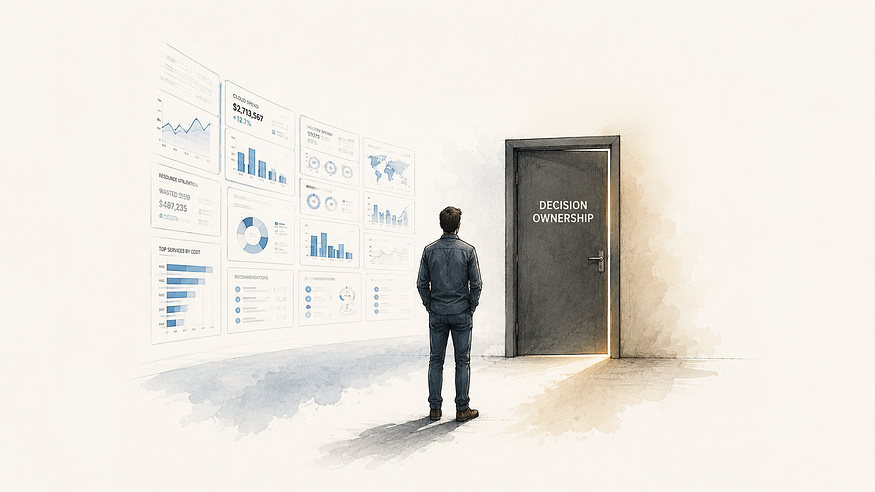
Because native tools are built for visibility — not accountability.
They show you what happened.
They don’t enforce ownership.
They don’t normalize complexity.
They don’t scale governance.
And at small scale? That’s fine.
At a larger scale? That’s expensive.
If you’re serious about FinOps maturity, here’s why cloud waste absolutely loves your native cloud cost tooling.
️Waste Hides in Spreadsheets
Native tools give you raw data.
But when you need:
- Cross-account reporting
- Business-level allocation
- Shared cost distribution
- Finance-ready views
You export.
You normalize.
You stitch.
You adjust.
And every manual step creates:
- Delay
- Inconsistency
- Blind spots
Cloud waste loves blind spots.
If your monthly cloud reporting process requires spreadsheet assembly, your tooling isn’t controlling cost — it’s documenting it.
Multi-Cloud = Fragmented Visibility
Native cost tools operate in silos.
AWS sees AWS.
Azure sees Azure.
GCP sees GCP.
But your business sees total cloud spend.
When each provider has:
- Different dimensions
- Different allocation constructs
- Different commitment mechanics
- Different reporting logic
You end up building a human translation layer.
That translation layer is where waste hides.
Every time you duplicate processes per cloud, you create friction. And friction creates inefficiency.
Finance Can’t See True Cost
Cloud invoices are not simple.
There are:
- Enterprise discount programs
- Savings plans
- Reserved instances
- Credits applied post-close
- Amortization nuances
Native dashboards often show invoice totals — not economic truth.
If your cost model can’t clearly surface:
- Effective rates
- Amortized vs list cost
- Realized savings
- Commitment coverage gaps
You’re not managing cost.
You’re reacting to invoices.
Waste loves reactive environments.
Optimization Stops at Compute
Many native tools focus heavily on VM rightsizing.
That’s fine — until you realize modern cloud waste lives in:
- Managed databases
- Storage
- Snapshots
- Idle services
- Container backplanes
- Misaligned commitments
If your optimization strategy is compute-only and narrow in scope, your surface area for savings is artificially small.
Waste thrives when you limit your visibility to one slice of the bill.
Kubernetes Becomes a Giant Shared Cost Pool
Containers are the “cloud inside the cloud.”
But in many native dashboards, Kubernetes-backed infrastructure appears as large, shared cost buckets.
If you can’t:
- Allocate container costs by namespace or team
- Integrate container spend into budgets
- Forecast container growth
- Tie container cost to accountability
Then the fastest-growing segment of your cloud bill becomes the least governed.
Waste loves shared costs with no owner.
Chargeback Depends on Trust, Not Math
Here’s a dangerous signal: Business units question their bill.
They dispute allocations.
They challenge shared costs.
They request custom breakdowns.
Native tools typically rely heavily on tags and basic grouping constructs.
But real organizations have:
- Date-bound ownership changes
- Shared services
- Complex hierarchies
- Partial allocations
- Hybrid environments
If allocation requires manual overrides and post-processing, your cost model is fragile.
Waste thrives in fragile systems.
You Discover Overspend After Month-End
Cloud bills by the second.
But many teams only truly understand their spend weeks later.
If your process looks like:
- Month closes
- Invoice lands
- Variance analysis begins
- Root cause hunting starts
You are operating backward.
True FinOps maturity means:
- Near-real-time visibility
- Predictive forecasting
- Anomaly detection
- Proactive budget alerts
Waste loves delayed feedback loops.
Engineering Is Comfortable. Finance Is Not.
Native tools are built for engineers.
They’re:
- Console-centric
- Infrastructure-focused
- Account-driven
They are not:
- Persona-based
- Finance-structured
- Hierarchy-aware
- Built for federated executive visibility
When engineering says “the dashboard looks fine,”
and finance says “this doesn’t align to our structure,”
That gap is where waste grows.
The Maturity Moment
You don’t outgrow native tools at a specific dollar amount.
You outgrow them when:
- Cloud becomes strategic
- Budgets affect EBITDA
- Multi-cloud becomes permanent
- Containers dominate growth
- Commitment strategy matters
- Accountability must be defensible
At that point, “free” tools create hidden cost:
- Manual effort
- Delayed insight
- Missed savings
- Weak allocation
- Limited optimization surface
- Governance gaps
Cloud waste loves all of those.
So What Does Waste Hate?
Waste hates:
- Clear ownership
- Broad optimization coverage
- Multi-cloud normalization
- Advanced allocation logic
- True cost metrics
- Integrated Kubernetes cost management
- Forecast-driven governance
- Persona-based visibility
That’s where purpose-built cloud financial management platforms come in.
One example is Apptio Cloudability — designed specifically to extend beyond native dashboards and support scaling FinOps practices across engineering, finance, and leadership.
It doesn’t replace your cloud provider.
It connects the financial truth across them.
It turns visibility into accountability.
And accountability is kryptonite for waste.
The Real Question
Are you using your cloud cost tool to observe spend?
Or to govern it?
Because those are two very different things.
And cloud waste absolutely knows the difference.
Visit the FinOps Universe blog