Architecture
The Dashboard Trap
Most FinOps dashboards look impressive during the first three months.
Executives are excited.
Teams explore the data.
Everyone talks about visibility.
Then something predictable happens.
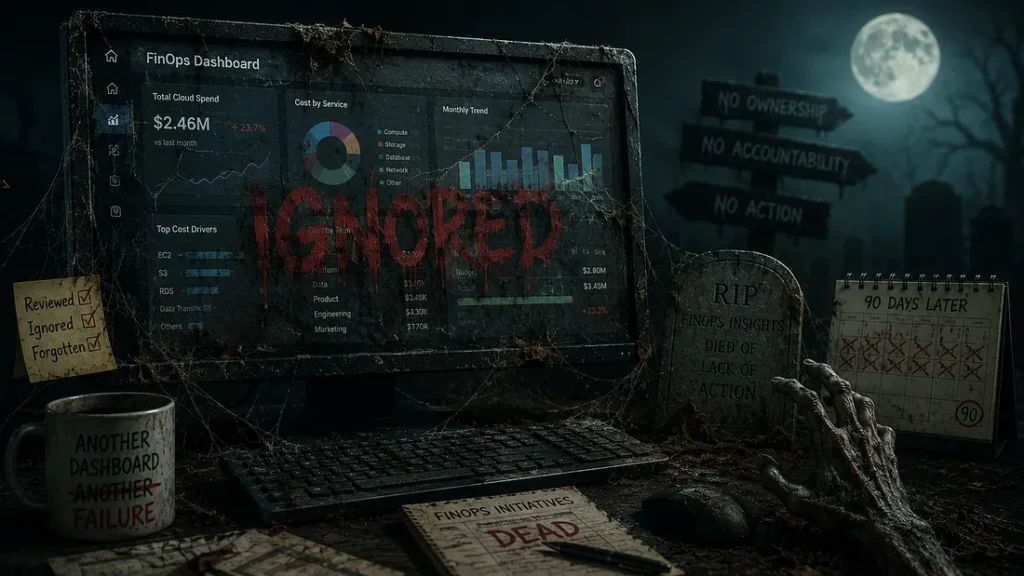
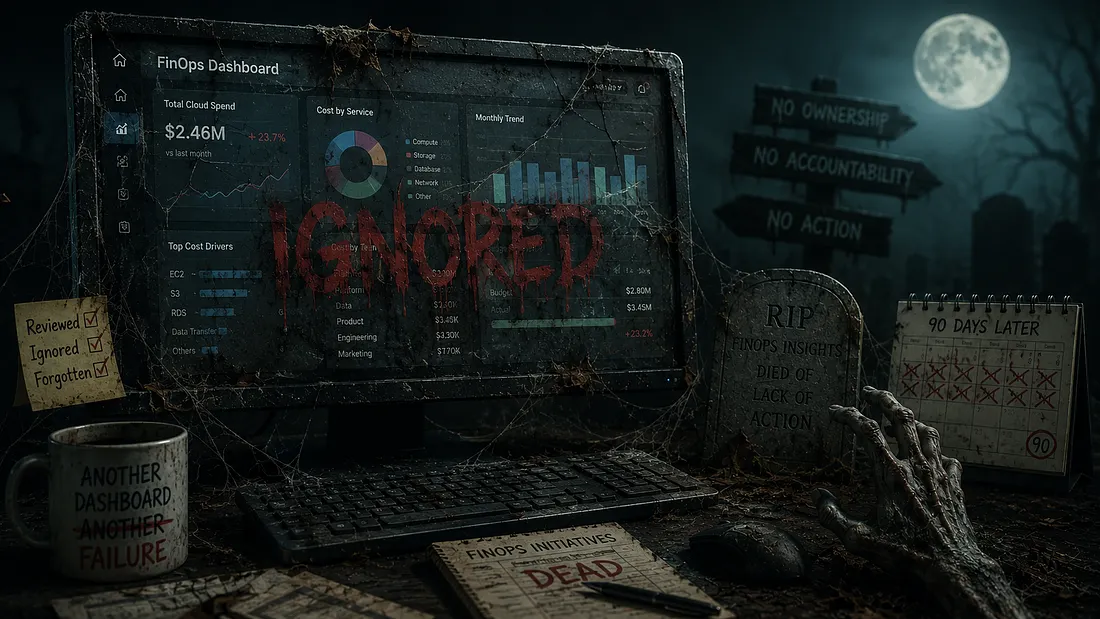
The dashboards slowly stop mattering.
Visibility Fatigue Is Real
Modern enterprises already suffer from dashboard overload:
- security dashboards
- observability dashboards
- incident dashboards
- business intelligence dashboards
- compliance dashboards
FinOps dashboards often become just another screen people occasionally glance at but rarely operationalize.
The issue is not lack of data.
The issue is lack of workflow integration.
Reporting Does Not Create Accountability
A dashboard can show:
- cost spikes
- idle resources
- allocation gaps
- namespace growth
But unless operational teams are accountable for acting on the information, nothing changes.
This is why many FinOps initiatives plateau:
- engineering teams ignore reports
- finance teams lack technical authority
- platform teams prioritize uptime over efficiency
- optimization recommendations never become operational policy
Visibility without enforcement creates organizational theater.
The Real Problem Is Organizational Design
Most companies accidentally structure FinOps as a reporting function instead of an operational function.
Get FinOps Universe’s stories in your inbox
That creates a dangerous gap:
- dashboards identify problems
- nobody owns remediation
Eventually:
- alerts get ignored
- reports become repetitive
- leadership disengages
- dashboards become passive documentation systems
This is why so many FinOps programs lose momentum after initial excitement.
AI Infrastructure Will Make This Worse
AI systems generate:
- highly dynamic workloads
- volatile GPU costs
- inference spikes
- observability explosions
- inconsistent scaling patterns
Static dashboards cannot keep pace with these operational realities.
Organizations increasingly need:
- automated governance
- policy-driven optimization
- predictive recommendations
- real-time operational controls
Not just prettier charts.
The Future of FinOps
The next generation of FinOps will look less like:
- reporting
- spreadsheets
- executive dashboards
And more like:
- operational automation
- embedded engineering workflows
- cost-aware infrastructure orchestration
- continuous optimization systems
The winners will not necessarily have the most dashboards.
They will have the tightest connection between:
- visibility
- accountability
- automation
- operational action
View Architecture or contact us to discuss your FinOps priorities.